

Chorus combines a particular couples shape with a squeeze remote, so replacing it involves two separate choices. You may want to retain a shared control arrangement while changing where the device sits, or preserve a dual format with a different controller. Keeping those priorities separate makes this shortlist easier to use.
Chorus combines two ideas that are easy to confuse: a couples device with an adjustable fit, and a squeeze-responsive controller. You might want to replace the fit, the controller, the connected setup or the entire wearing arrangement. A useful alternative depends on which of those is driving the search.
SVIBE Snail Jovi is the first option here for a ring-based setup with a remote. Lovense Dolce and We-Vibe Sync 2 keep the discussion closer to dual couples formats. Dame Eva, Lovense Ferri, Dame Hug and We-Vibe Moxie+ offer different external or wearable arrangements. The list is deliberately organised around those differences rather than treating every couples product as another Chorus.
Before choosing, agree on what the device is meant to do during shared use. A remote that one person enjoys operating will not make the wrong physical arrangement right for the other person.
Seven alternatives and the control decision behind each
| Rank | Alternative | Main reason to compare |
|---|---|---|
| 1 | SVIBE Snail Jovi | A ring-based setup with a separate remote |
| 2 | Lovense Dolce | Adjustable dual geometry with connected features |
| 3 | We-Vibe Sync 2 | Another adjustable couples format |
| 4 | Dame Eva | External wearable placement without a dual internal arm |
| 5 | Lovense Ferri | Clothing-based magnetic placement |
| 6 | Dame Hug | A different vibrating ring design |
| 7 | We-Vibe Moxie+ | A remote-controlled panty format |
Chorus alternatives: controls, cost and build
The controller is only part of the purchase. Ring and panty formats change how the device is worn, while the warranty and materials describe a different part of ownership.
| Product | Listed price | Key specifications | Controls | Build quality: materials & protection | Power & charging |
|---|---|---|---|---|---|
| We-Vibe Chorus (reference) | From US$159 sale; listed US$219 | Adjustable dual couples format | Squeeze remote + app | Silicone + ABS; 2-year warranty | Rechargeable |
| 1. SVIBE Snail Jovi | US$65 sale; listed US$130 | Two motors; ring format | Included remote | Silicone; 2-year warranty | Rechargeable |
| 2. Lovense Dolce | US$119 sale; listed US$239 | Adjustable dual-ended design | Device + Lovense app | IPX7; 1-year warranty | 1–2 h stated use |
| 3. We-Vibe Sync 2 | From US$139 sale; listed US$169 | Adjustable dual couples format | Remote + We-Vibe app | Silicone; 2-year warranty | Rechargeable |
| 4. Dame Eva | US$129 | 2.4 in overall width including wings | 3 intensities; device control | Silicone; waterproof; 3-year warranty | 1 h at highest; 4 h charge |
| 5. Lovense Ferri | US$89 sale; listed US$199 | Magnetic panty attachment | 3 local levels + app control | Silicone + ABS; IPX7; 1-year warranty | Up to 195 min; 1 h charge |
| 6. Dame Hug | US$79 | Vibrating ring format | 5 intensities; device controls | Silicone; waterproof; 3-year warranty | 1 h at highest; 2 h charge |
| 7. We-Vibe Moxie+ | From US$119 sale; listed US$149 | Magnetic panty format | Remote + app | Silicone; IPX7 | Rechargeable |
Listed item prices checked 9 November 2026; USD unless marked EUR. Shipping and checkout taxes are separate. Specifications and warranty terms are manufacturer-stated.
Separate the person wearing it from the person controlling it
The Chorus product page describes an adjustable couples vibrator and a squeeze remote that responds to pressure. That is a distinctive control concept, but it answers only part of a shared-use purchase.
First ask the wearer about the format. Is an internal/external arrangement wanted? Would an external-only device be preferable? Does a ring make sense for the people involved? These are physical decisions that need to be settled before discussing which remote looks most interesting.
Then ask how control should be shared. One person may want to operate the remote, while the other wants easy access to the stop control. You might prefer physical buttons over a phone, or you might specifically want a supported connected setup. There is no reason to assume those preferences align automatically.
Finally, think about transitions. How will the device be repositioned or put aside when you change activities? An arrangement that is understandable to both people is more useful than one chosen because its feature list sounds sophisticated.
These questions divide the seven alternatives into manageable groups: dual devices, external wearables, rings and clothing-attached products. Compare within the group that fits the plan rather than asking all seven to compete on a single vague definition of “best for couples.”
1. SVIBE Snail Jovi — a remote-controlled ring route
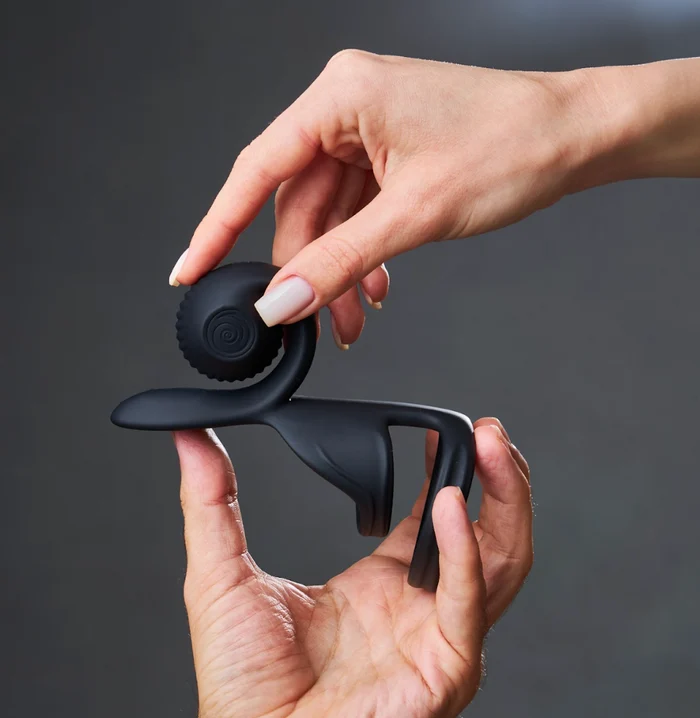
Snail Jovi uses a couples-ring arrangement with two motors and a separate remote. It is a clear alternative when you want to keep shared control but reconsider the way the device is worn.
The ring format is the deciding feature. It changes the attachment and the relationship between the device and both partners, rather than merely providing a new controller for a Chorus-like shape.
That means Jovi should be shortlisted only when the ring arrangement is wanted. Check the stated ring dimensions and the manufacturer’s fitting directions. A product being described as a couples device does not establish that every couple wants the same wearing setup.
The remote gives you a practical control object to discuss. Where will it be placed? Who will use it? Can both people identify how to stop or change the setting? Those questions are useful precisely because the controller is separate from the body of the device.
Jovi earns the first position as a specific route away from the C-shaped dual brief. It is not a claim that a ring is universally better than Chorus. It is a different arrangement with a clear shared-use purpose, worth investigating when that physical change is the point of the purchase.
2. Lovense Dolce — adjustment with a different outline

Dolce is an adjustable dual vibrator with connected features. It stays closer to the internal/external branch of the Chorus comparison while giving you another physical configuration to assess.
The important question is how the two ends are positioned relative to one another. Look at the permitted adjustment and the available grip before comparing the software. A shared category does not mean the devices occupy the same space or are handled in the same way.
Dolce also gives you a useful test of whether the squeeze remote was essential to your interest in Chorus. If you were mainly attracted to an adjustable dual device, the control method may be secondary. If pressure-based remote interaction was the main appeal, changing to another system needs a stronger reason.
For connected use, check the current supported setup for the exact model and intended mode. A general statement that a brand supports remote play is not a complete description of every connection scenario.
Dolce belongs among the finalists when you want to retain a dual arrangement and are open to reconsidering both geometry and control. If the internal component is what you want to remove, Eva or one of the external clothing-attached options is a more direct change.
3. We-Vibe Sync 2 — compare within the same broad category
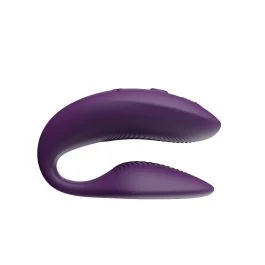
Sync 2 is another adjustable couples vibrator. It is useful when the Chorus category itself is right, but you want to compare a different implementation before committing.
This is a narrower comparison than moving to a ring or external-only wearable. You can focus on adjustment, profile, controls and included accessories while keeping the broad internal/external purpose consistent.
Do not assume that shared branding makes every feature interchangeable. The controller, adjustment points and product instructions should be checked for Sync 2 specifically. Chorus features should remain attached to Chorus unless the Sync 2 documentation confirms them too.
The name also matters within the Sync family. Sync 2, Sync O, Sync Go and Sync Lite are separate products. A shortened shop title can make them look like simple variants when the differences may be more substantial.
Sync 2 is the sensible research direction if you want to stay close to the original brief and examine practical differences without changing categories. It is less useful if you already know that a dual couples format is not what you want. In that case, another product from the same category may simply repeat the original mismatch.
4. Dame Eva — keep the device external

Dame Eva is an external wearable with flexible wings. It changes the comparison by removing the internal arm of a dual device and using a different placement design.
That is relevant when the external component is the part you want from a couples toy. You can investigate a wearable arrangement without assuming that internal stimulation needs to be included in the same object.
Eva’s wings deserve attention as a retention feature. They are not equivalent to the adjustable body of Chorus, and the way the device is positioned needs to be understood on its own terms. “Wearable” identifies a broad idea, not one universal attachment method.
The control question changes too. Do not transfer expectations about a squeeze remote from Chorus to Eva. Compare how the specific model is operated and whether that suits the person using it.
Eva is a strong alternative when you want an external-only wearable and are happy to reconsider the controller arrangement. It is a poor match if retaining both internal and external stimulation in one device is essential. That difference should settle the shortlist before you spend time comparing colour or packaging choices.
5. Lovense Ferri — choose clothing-based placement intentionally
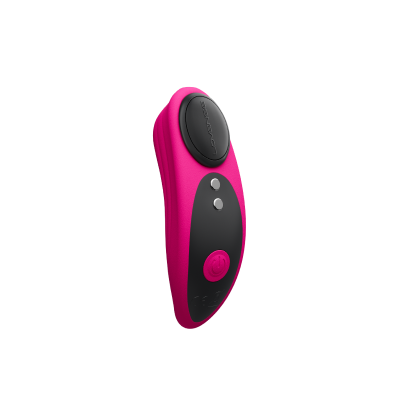
Ferri is Lovense’s magnetic panty vibrator. Its main contribution to this list is a different attachment strategy: external placement supported by clothing rather than a dual body or ring.
That makes the intended setting important. If the product is meant for a private situation where the relevant clothing remains in place, the format may be worth investigating. If your plan does not involve that clothing, the main reason to choose Ferri is less clear.
Connected control is another aspect to assess, but it does not remove the physical requirement. Start with placement, then examine the supported control method. Otherwise, an appealing app interface can distract from the fact that the device is designed for a different arrangement.
Ferri should also be compared with Moxie+ below as a clothing-attached decision. That comparison is more focused than treating it as a miniature Chorus. The questions are where the device sits, how it is retained and how the controls are reached.
Choose Ferri for further research when a magnetic external wearable fits the intended private use. If the purpose is a body-worn device without a clothing attachment, return to Eva, a dual format or a ring rather than forcing Ferri into a role it was not selected to fill.
6. Dame Hug — another way to approach a vibrating ring
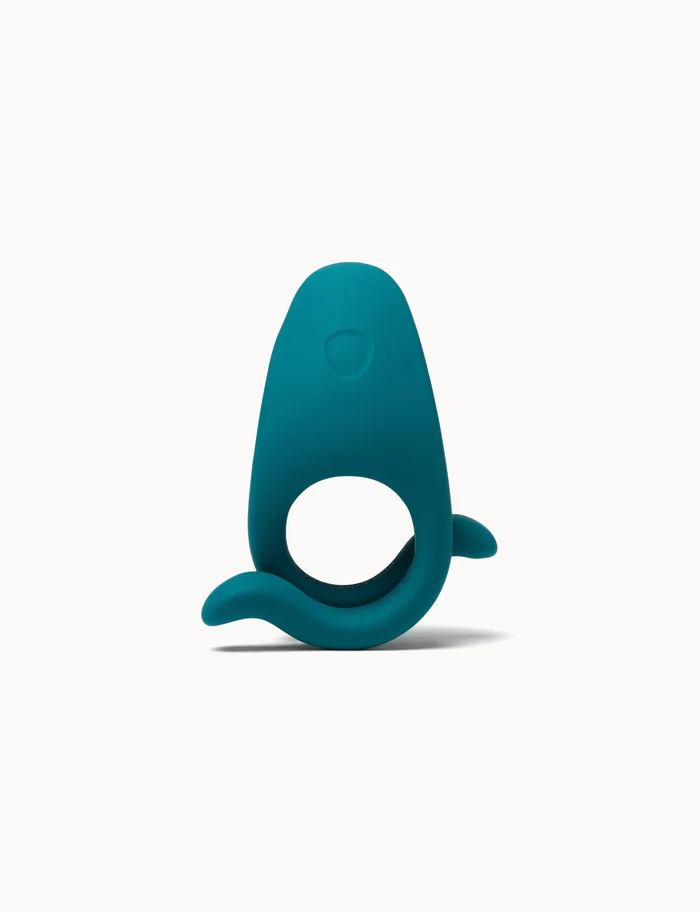
Dame Hug is a vibrating ring designed for shared use. It gives you a second ring-based candidate after Jovi, which is useful if you have already decided that a ring is the right category.
At that point, the comparison can become more specific. Examine the ring shape, the external contact surface, the controls and the fitting instructions. Those are more relevant than whether one product has a longer general description of couples pleasure.
Hug should not be assumed to include Jovi’s remote simply because both are rings. Accessories and control methods need to be confirmed for each exact product. A category match is not a specification match.
The ring format also means that the decision belongs to both users. The person wearing it and the person experiencing the external contact may have different priorities. Discuss those priorities before selecting a shape on the basis of a single photograph.
Hug is a useful alternative when you want to compare ring designs rather than keep the dual arrangement of Chorus. If a ring is not part of the intended setup, there is no need to keep it in contention simply because it appears in the same broad couples category.
7. We-Vibe Moxie+ — a remote-controlled panty format
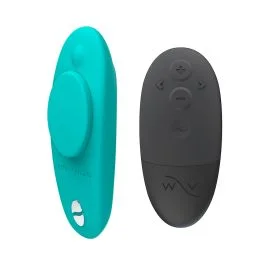
Moxie+ is a remote-controlled panty vibrator. It is another route to an external clothing-based arrangement, keeping a separate control device in the discussion while changing where the vibrator is positioned.
This can appeal when the remote is part of what you liked about Chorus but the internal/external body is not. You are preserving an aspect of the control workflow while deliberately changing the wearing format.
The clothing requirement should remain explicit. A panty vibrator is not a general substitute for every body-worn couples device. Its positioning and retention need to make sense for the private use you have planned.
Compare the exact Moxie+ listing rather than borrowing details from the original Moxie. The plus sign identifies the model being considered, and accessories or functions should be recorded against that full name.
Moxie+ belongs among the finalists if you want external clothing-based placement and a remote-control approach. If your central requirement is dual internal/external stimulation, Sync 2 or Dolce provides a more relevant comparison. The value of this option is the category change, not an attempt to reproduce Chorus in a smaller package.
Build a shortlist both people can agree on
Begin with one question each. The wearer chooses the acceptable physical categories. The person sharing control identifies the control method they actually want to use. The overlap between those answers is your shortlist.
If the overlap is “ring plus remote,” start with Jovi and compare its exact arrangement with the other ring options. If it is “adjustable dual device,” compare Dolce and Sync 2. If it is “external wearable,” decide whether that means body placement through Eva or clothing-based placement through Ferri and Moxie+.
Then rehearse the ordinary decisions in words: changing a setting, stopping, repositioning and putting the product aside. Both people should know how those actions would work. This makes the choice more concrete without assuming any particular product will suit every body or activity.
For the wider conversation, our Behind the Bush article on changing your bedroom routine keeps the focus on shared preferences. You can find the site’s own practical information in the FAQs, while fitting and operating directions should come from the linked manufacturers.
Chorus is distinctive because its wearing format and squeeze controller work together as a concept. A good alternative does not have to copy both. It does need to preserve the part you value and make the other changes clear enough that both people know what they are choosing.